

Becoming a full stack Python developer involves mastering both front-end and back-end development using Python. Here’s a step-by-step guide:
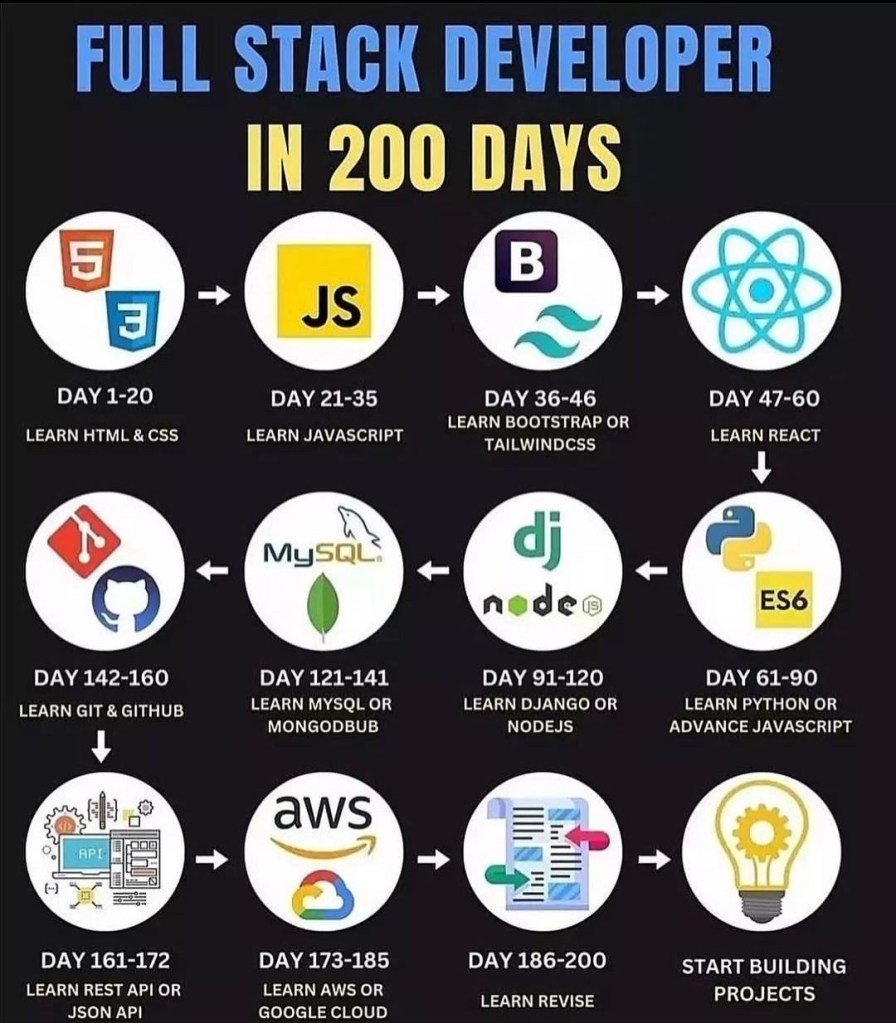
- Learn Python: Start by mastering the Python programming language. Understand its syntax, data structures, and object-oriented principles.
- Front-End Development:
- HTML/CSS: Learn how to create the structure and style of web pages using HTML and CSS.
- JavaScript: Understand client-side scripting for interactivity and dynamic content on web pages.
- Front-End Frameworks: Familiarize yourself with popular front-end frameworks like React, Angular, or Vue.js.
- Back-End Development:
- Web Frameworks: Choose a Python web framework such as Django or Flask. Learn how to use it to build robust back-end systems.
- Database Management: Understand relational databases (e.g., PostgreSQL, MySQL) and NoSQL databases (e.g., MongoDB) to store and retrieve data for your web applications.
- RESTful APIs: Learn how to design and implement RESTful APIs to communicate between the front-end and back-end of your applications.
- Version Control: Master Git for version control to efficiently manage your codebase and collaborate with others.
- Deployment: Learn how to deploy your web applications to production environments using platforms like Heroku, AWS, or DigitalOcean.
- Testing and Debugging: Familiarize yourself with testing frameworks and debugging tools to ensure the quality and reliability of your code.
- Continuous Learning: Stay updated with the latest trends, best practices, and emerging technologies in full stack development through books, online courses, tutorials, and communities.
- Build Projects: Practice your skills by working on real-world projects that integrate both front-end and back-end technologies. This will not only reinforce your learning but also showcase your abilities to potential employers or clients.
- Networking: Engage with the developer community by participating in forums, attending meetups, and joining online communities. Networking can provide valuable insights, mentorship, and job opportunities.
- Portfolio: Create a portfolio website or GitHub repository to showcase your projects, contributions, and skills. A well-curated portfolio is essential for attracting employers or clients.
By following these steps and maintaining a growth mindset, you can become a proficient full stack Python developer. Remember to practice regularly, seek feedback, and never stop learning.


 Learn4school
Leave a comment