

Becoming a mobile developer involves gaining the necessary education, developing technical skills, and gaining practical experience. Here’s a step-by-step guide to help you get started:

Educational Foundation
- Obtain a Relevant Degree:
- Bachelor’s Degree: While not always mandatory, a degree in computer science, software engineering, information technology, or a related field provides a strong foundation in programming and software development principles.
- Learn Programming Languages:
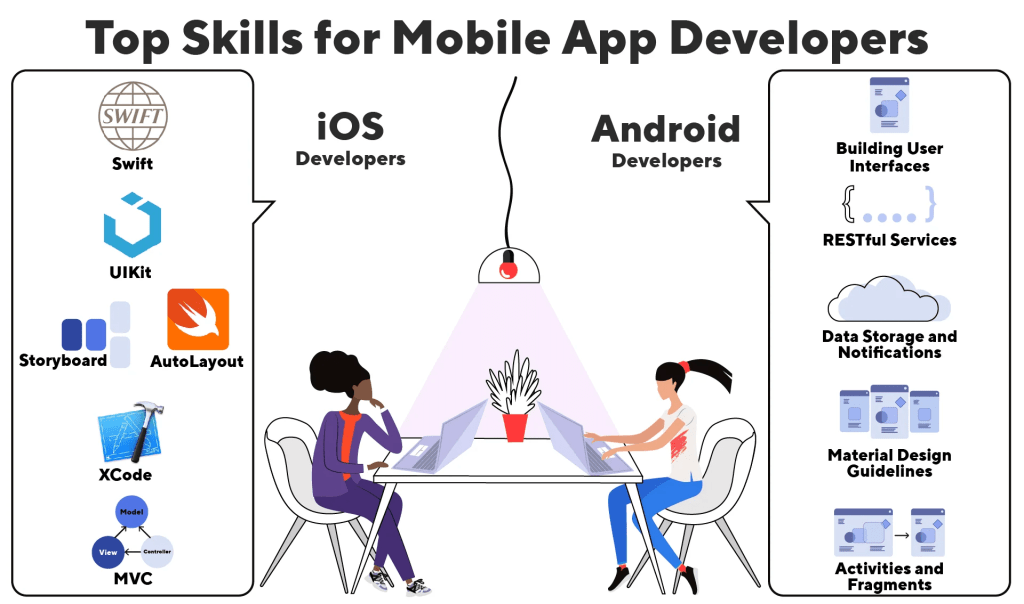
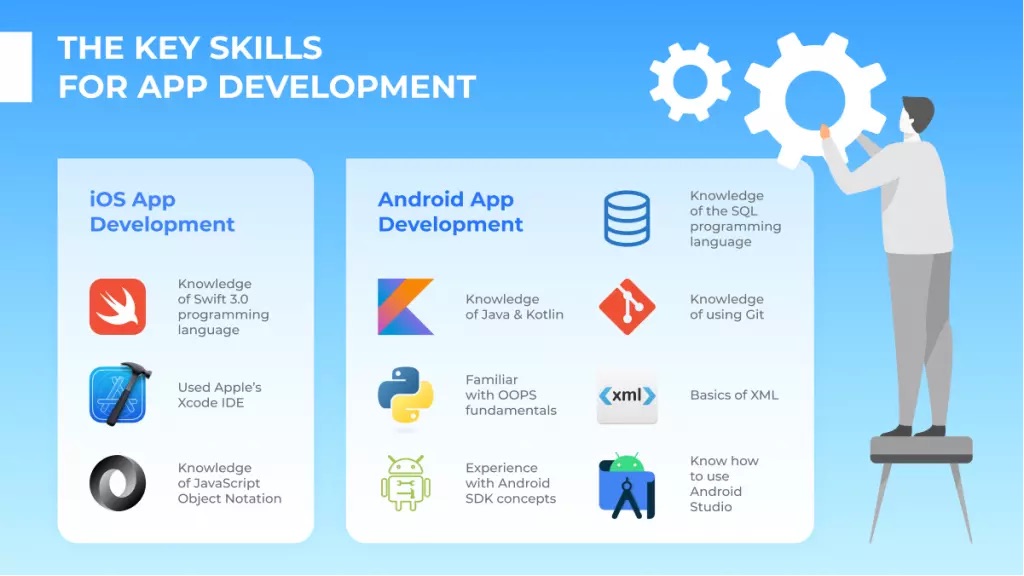
- For iOS Development: Learn Swift and Objective-C. Swift is the primary language for iOS development.
- For Android Development: Learn Java and Kotlin. Kotlin is now the preferred language for Android development.
- Cross-Platform Development: Consider learning Dart (for Flutter), JavaScript (for React Native), or C# (for Xamarin).
Technical Skills Development
- Understand Mobile Development Basics:
- Learn the fundamentals of mobile app development, including UI/UX design principles, mobile app architecture, and platform-specific guidelines (Apple’s Human Interface Guidelines for iOS and Google’s Material Design for Android).
- Familiarize Yourself with Development Tools:
- iOS Development: Get comfortable with Xcode, the integrated development environment (IDE) for iOS.
- Android Development: Learn to use Android Studio, the official IDE for Android development.
- Cross-Platform Development: Familiarize yourself with tools like Flutter (Dart), React Native (JavaScript), and Xamarin (C#).
Practical Experience
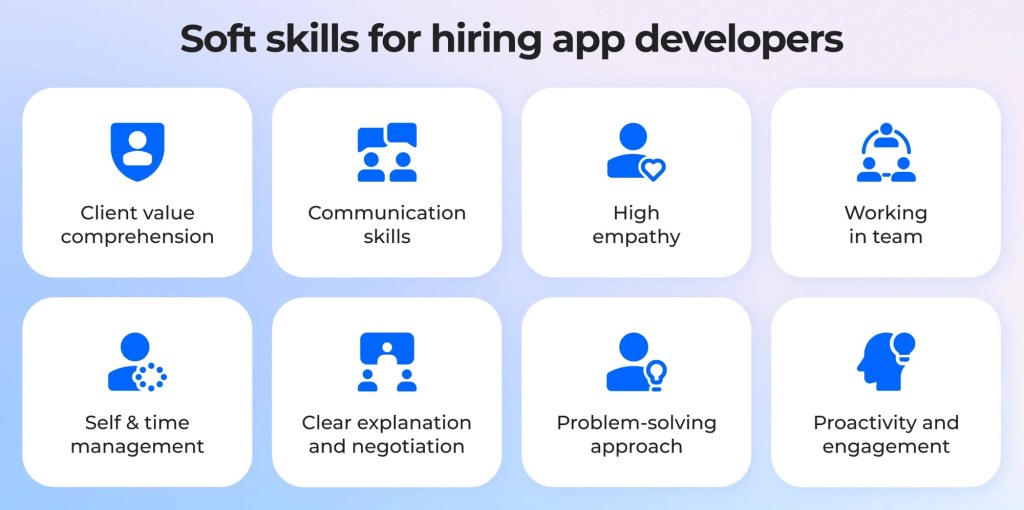
- Build Your First Apps:
- Start with simple projects to understand the development process. Gradually move to more complex applications. Focus on both the front-end (user interface) and back-end (data handling, server communication) aspects.
- Use Version Control:
- Learn to use Git for version control. Platforms like GitHub or GitLab are essential for collaborating with others and showcasing your projects.
- Develop a Portfolio:
- Create a portfolio of your work, including completed projects, source code, and any contributions to open-source projects. This demonstrates your skills to potential employers.
Advanced Learning and Specialization
- Take Online Courses and Tutorials:
- Utilize platforms like Coursera, Udemy, edX, and Pluralsight to take courses on mobile development. There are many specialized courses for both iOS and Android development.
- Stay Updated:
- Mobile development is a rapidly evolving field. Stay current with the latest trends, updates, and best practices by following blogs, joining forums, and participating in developer communities.
Career Development
- Get Certified:
- Consider obtaining certifications that validate your skills, such as Google’s Associate Android Developer Certification or Apple’s App Development with Swift Certification.
- Gain Work Experience:
- Look for internships or entry-level positions to gain practical experience. Real-world experience is invaluable and often necessary to advance your career.
- Network and Connect:
- Attend industry conferences, join local developer meetups, and participate in online communities. Networking can help you find job opportunities and connect with mentors.
- Apply for Jobs:
- Look for job openings as a mobile developer. Tailor your resume and cover letter to highlight your skills, projects, and experience relevant to the job.

By following these steps, you can build a strong foundation in mobile development and position yourself for a successful career in this dynamic field.


 Learn4school
Leave a comment